
 “The goal is not just to hire people who need a job. It’s to hire people who believe in what you believe…If you hire people just because they can do a job, they will work for your money. But if you hire people who believe what you believe they will work for you with blood, and sweat, and tears.” Simon Sinek, How Leaders Inspire Action.
I have mentioned to a number of you previously that when I began Concord Professional Development I wanted to come up with a tag …
 Perhaps it’s just that my memory is failing, but I am fairly positive that I never called my father “dude”. And I think it would be safe to say that even addressing my parents by their first names was pushing the limits. But today, my kids have no problem using my first name and yes, from time to time, they will even call me ‘dude’.
 Last month I suggested that constructive conflict is about ideas and issues, not persons and personalities. While I believe this to be true, in a significant respect conflict is always personal. We cannot help but bring who we are into any discussion that we have. And the more invested in the topic we are, the more important it is to understand this point.
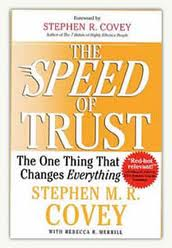 Jim Kouzes and Barry Posner are quoted as saying, “Trust is the most significant predictor of individuals’ satisfaction within their organizations.” So it would seem appropriate to ask, do you trust the organization you work for? Or put in a somewhat larger context; is your organization a trustworthy one? These can be intimidating questions, but if Kouzes and Posner are correct, they are important ones to ask.
 In his book, The Speed of Trust, Stephen Covey Jr. tells the story of Jim, a street vendor, who sold coffee and donuts in New York.
 A little while ago my son Sam was asking me if there were some odd jobs he could do to earn a little extra money. I told him that this summer I was planning on painting our fence and if he helped me I would be willing to pay him for his efforts. Without missing a beat he looked at me and said, “Dad, are you using paint that is good for the environment?”
 Last month I commented on Seth Godin’s book, Tribes. I focused on the idea that leaders, as well as great organizations, do not just react to what is immediately going on around them, they initiate or create the environment they want to be in. I had this idea re-enforced and further clarified for me at my son’s 11th birthday party.
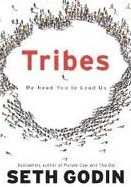 Reflexes really are amazing things. From the first time we go to the doctor for a general physical and they ‘tap’ our knee with that little rubber hammer and our leg instinctively kicks, we realize that good health is marked by the ability to react or respond to things going on around us. And I have always been impressed by quick reaction times. Someone who reaches out and catches a falling item before it hits the counter or floor, the driver who avoids an accident by quickly responding to a …
Committed or Pig-Headed?
Tuesday, January 24th, 2012